
From India, a New Standard for Brain Tumour Support
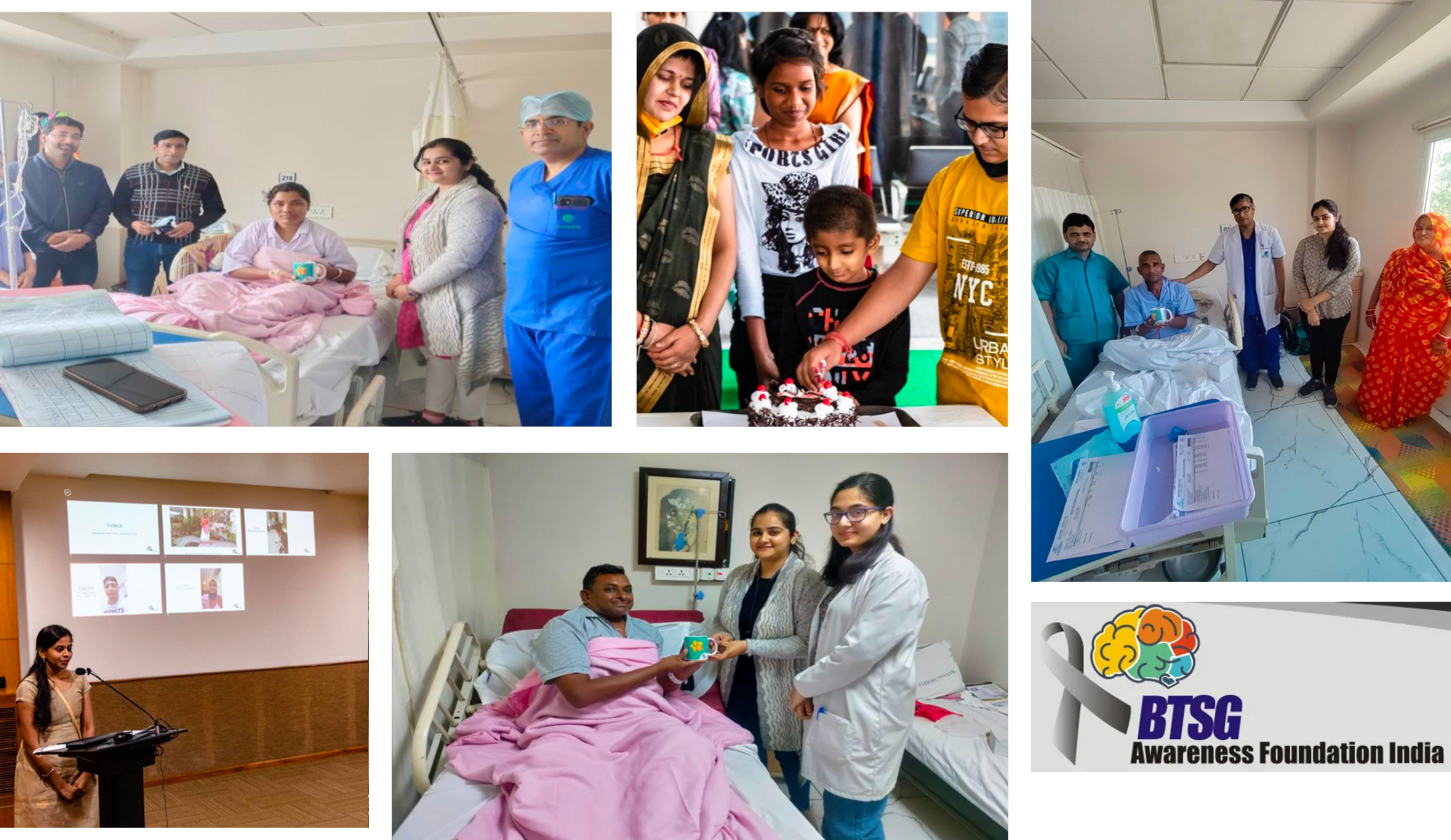
Dr. Nitin Garg and the Brain Tumour Support Group Awareness Foundation India (BTSG) have pioneered a model of care that places a trained psychologist at the heart of the brain tumour treatment team from day one. This article explores their five-year journey embedding real-time psychological support into clinical practice in Bhopal, India, and what the results mean for patients, caregivers, and the wider brain tumour community.
When a patient in India receives a brain tumour diagnosis, the medical system moves quickly toward surgery, radiotherapy, and chemotherapy. What it rarely moves toward, at least not quickly enough, is the person sitting in that clinic room trying to process what they have just been told. Dr. Nitin Garg, neurosurgeon and Director of BTSG in Bhopal, India, has spent years trying to change that.
The Gap Nobody Was Addressing
In standard brain tumour care, psychological and psychosocial support has traditionally been treated as an afterthought, something offered, if at all, once active treatment is complete. The emotional crisis of diagnosis, the fear before surgery, the disorientation of recovery were largely left for patients and families to navigate alone.
Dr. Garg and his team at Brain Tumour Support Group Awareness Foundation India identified this as a critical gap. Their response was a model they call Real-Time Psychological Support, an approach in which a trained psychologist or counsellor is embedded as an active, permanent member of the neurosurgical and neuro-oncology team. Support begins at the moment of diagnosis and continues throughout the entire course of treatment and follow-up, not after it.
The rationale is well-supported by evidence. An ALL.CAN Foundation patient survey of 3,981 patients found that 88% of brain tumour patients and their families felt that psychological support during treatment would have been very helpful. Of those who did receive such support, 88% rated it as “very” or “quite” helpful. Yet 36% of those who said they needed it reported it was simply not available to them.
How the Model Works
The BTSG Awareness Foundation approach integrates psychological care into the clinical workflow at every stage.
In outpatient settings, the psychologist is present in a dedicated room within the same facility as the clinical team. After an initial medical discussion, patients are referred directly to the counsellor. The clinician briefs the psychologist on the probable diagnosis so that counselling can be tailored and informed from the very first meeting. Patients are enrolled in a support group, given reading materials, and provided contact details for phone and video follow-up between visits.
For inpatients, the psychologist joins ward rounds with the surgical team, meeting patients and families during admission and on the day of surgery. For patients who missed outpatient counselling, the inpatient setting offers a second opportunity to access support. Families are kept in close contact with the counsellor throughout the hospital stay, and the counsellor in turn keeps the clinical team informed of any concerns raised.
Neuropsychological assessments are conducted pre and post-operatively, and at follow-up, to track cognitive function over time. All of these services are provided free of cost.
Five Years of Evidence
Between September 2019 and September 2024, Brain Tumour Support Group Awareness Foundation India delivered this model to 482 patients and their caregivers across two hospitals in Bhopal, Bansal Hospital and Bhopal Memorial Hospital and Research Centre. Patients ranged in age from 6 to 83 years, with a mean age of 41. The majority came from lower and middle socioeconomic backgrounds, with 65% from rural areas, a demographic for whom mental health support is rarely accessible.
The results across both patient and caregiver groups were meaningful. Before surgery, targeted psychoeducation and pre-surgical counselling reduced fear and psychological distress, and helped patients better understand what to expect from their procedure. After surgery, supportive therapy and crisis intervention reduced feelings of hopelessness and worthlessness, and supported improvement in memory and cognitive function. At follow-up, patients showed significant improvement in psychological wellbeing and a greater ability to cope with ongoing challenges rather than feeling paralysed by them.
For caregivers, outcomes followed a similar pattern. Pre-surgical counselling helped families understand the nature of the tumour and what the procedure involved, reducing anxiety. Post-surgical support helped caregivers feel confident that appropriate treatment was being received, removing a source of considerable distress. By follow-up, caregiver self-esteem and psychological resilience had improved measurably.
Patient feedback reinforced these findings. Over 81% of patients reported that counselling helped them understand their treatment better. Half said it helped relieve anxiety and stress. Nearly 44% said it helped them cope better with the situation overall.
Doing the Work, Despite the Challenges
Embedding this model has not been without difficulty. Convincing neurosurgical and neuro-oncology teams, and hospital management, to accept a psychologist as a core team member required sustained effort. Social stigma around mental health meant that patients and caregivers were often reluctant to engage, and sustaining participation over time presented ongoing challenges.
These are not small obstacles, particularly in a context where mental health services carry significant stigma and resources are stretched. The fact that the Brain Tumour Support Group Awareness Foundation India team has maintained and expanded this programme over five years, across two hospital sites, while serving predominantly rural and lower-income communities, speaks to the depth of their commitment.
A Model Worth Sharing
Dr. Garg’s conclusion is clear and evidence-backed. Embedding a psychologist as an active member of the neurosurgical or neuro-oncology team meaningfully improves the ability of patients and their caregivers to face psychological distress from the moment of diagnosis, through treatment, and into recovery.
His recommendation to the wider community is equally direct. Neuro-oncology and neurosurgical centres should actively encourage brain tumour patients and their families to participate in counselling and support groups. Psychological care is not supplementary to brain tumour treatment. It is part of it.
This article was prepared for the Asia Pacific Brain Tumour Alliance’s “Our Collective Work” series, based on Dr. Nitin Garg’s presentation at the IBTA World Summit, Rome 2025.