Patient Advocacy Makes Its ASNO Debut
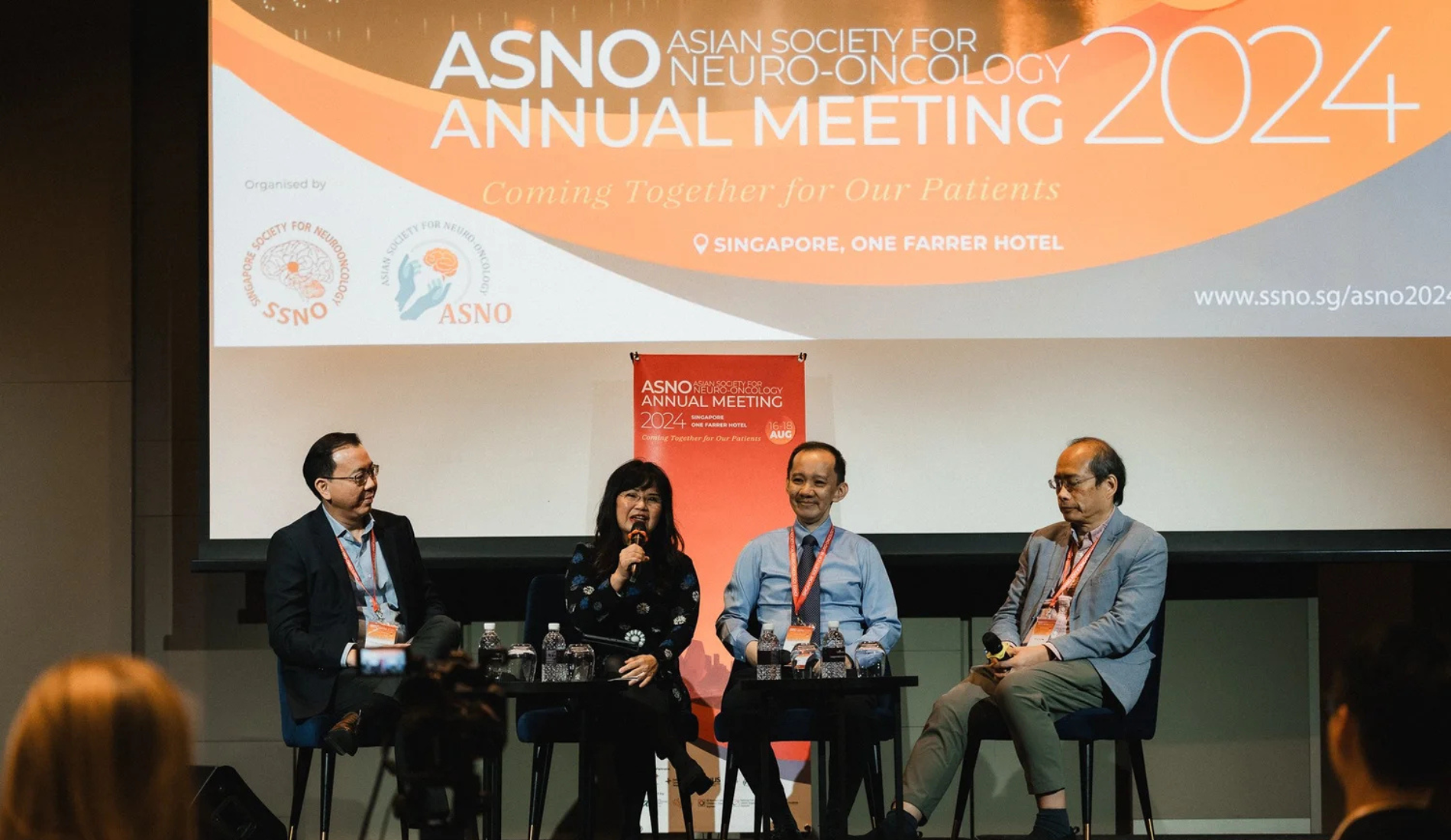
For the first time in the history of the Asian Society for Neuro-Oncology (ASNO), patients and advocates took to the stage not as guests, but as equal contributors to the programme. At the 19th annual ASNO meeting held in Singapore in August 2024, a dedicated patient advocacy track was included for the very first time, marking a turning point for brain tumour advocacy across the Asia Pacific region. This article looks at what happened, who was involved, and why it matters.
When the 19th annual meeting of the Asian Society for Neuro-Oncology (ASNO) opened in Singapore in August 2024, it did so with a theme that felt particularly fitting for the moment: “Coming Together For Our Patients.” Jointly organised by the Singapore Society for Neuro-Oncology and ASNO, the conference made history by including a patient advocacy track for the very first time. At the heart of that effort was Melissa Lim, President of Brain Tumour Society Singapore, who conceived, led, and chaired the track across two days of the conference.
Melissa opened the programme with a presentation introducing the Asia Pacific Brain Tumour Alliance to the ASNO audience, tracing its origins to a group of patient advocates from the region who first connected at the IBTA Fourth Biennial World Summit at the National Institutes of Health in Bethesda, Maryland, in 2019. What began as a recognition of shared purpose has grown, with guidance from IBTA Chair and Co-Director Kathy Oliver, into a regional alliance with affiliated groups in Australia, China, India, Japan, New Zealand, and Pakistan. Video clips showcasing each group’s work brought their contributions to life for conference delegates.
Together, We Can Do Magic
The first session examined the collaboration between healthcare providers and patient groups. A panel discussion with Dr Low Chyi Yeu David, patient representative Colin Chee, and Dr Yeo Tseng Tsai explored the motivations behind support groups, the respective roles of patient leaders and medical advisors, and guidelines for stakeholder engagement. Chris Tse, Chair of Brain Tumour Support NZ, dialled in to present a compelling case study of how a coordinated clinician-patient response successfully resolved a potential drug shortage in New Zealand.
The session also heard from Komal Syed of the Brain Tumour Foundation of Pakistan and Dr Nitin Garg of BTSG Awareness Foundation India, who joined Laureline Gatellier, President of the Japan Brain Tumour Alliance, to share their experiences. The contrast between more established organisations and those navigating strong cultural barriers to patient advocacy in parts of South Asia gave the discussion both depth and honesty.
Beyond the Clinics and Hospitals
The second session made the case for brain tumour specialist nurses. Dr Jackie Yim from the Brain Cancer Group in Australia opened with a presentation on their decision to sponsor a brain tumour specialist nurse programme, followed by the experience of caregiver Joanne Hüging. A joint presentation from Singaporean caregiver Karishma Tambawala and National University Hospital Care Coordinator Sister Laura Tan illustrated how care was extended beyond hospital walls into the homes of paediatric oncology patients. Neuro-oncology nurse practitioner Marina Kastalan from Australia reinforced the profound difference specialist nurses make to patients and caregivers.
A panel discussion explored how Sister Laura’s position was made possible through the charity LOVE,NILS, and the accountabilities that come with such arrangements, with contributions from Dr Miriam Kimpo of the National University Children’s Medical Institute and Staphnie Tang, Executive Director of LOVE,NILS.
The Power of Hope
The final session was perhaps the most deeply personal. Lynda Tse, an 18-year glioblastoma survivor, and Sarah Rigby of PVW Brain Tumor Foundation Hong Kong, a 12-year glioblastoma survivor, shared their stories. Chris and Lynda Tse also spoke movingly about navigating the brain tumour journey together as a couple and as a family. Dr Guo Cheng Cheng from China rounded out the session with reflections on how clinicians can actively nurture hope in their patients.
Seeds of Future Collaboration
The response from ASNO delegates was immediate and encouraging. Participants described the sessions as both informative and deeply touching, and several approached speakers after the track to ask for guidance on building patient support groups in their own neuro-oncology communities. Contact details were exchanged, and the seeds of future collaborations were planted.
As Melissa Lim put it, “We may be patients, but we have talents and resources to contribute alongside the medical and scientific community to work synergistically for the betterment of patients and caregivers.” ASNO 2024 proved exactly that.
This article was prepared for the Asia Pacific Brain Tumour Alliance’s “Our Collective Work” series. It was first published in the IBTA Brain Tumour magazine, authored by Sarah Rigby of PVW Brain Tumor Foundation Hong Kong and Melissa Lim of Brain Tumour Society Singapore.